
Smart home devices are meant to make your life easier and more enjoyable, but installing a lot of different devices from several manufacturers that do not cooperate with each other can make it even more complicated. This is why the Matter protocol is being created, a next-generation connectivity standard aimed at simplifying the smart home ecosystem by allowing all devices to communicate seamlessly. But will it all work as expected? And what will happen to your current devices?
Even though experimenting with a smart home sometimes brings minor frustrations (e.g., your voice assistant interprets your command incorrectly), the biggest frustration certainly comes from the lack of interoperability, the costs of purchasing a given smart home platform, and the necessary equipment and devices.
Outside the smart home market, most things we use in our homes are highly standardized and interoperable. You can easily connect your old speakers to your stereo receiver, for example, because the speaker cables and connectors are well interfaced with each other (they were subject to the same standard). In the same vein, simplicity is maintained when changing light bulbs. If it fits, it simply works. And it does not matter if the bulbs are made by different companies or if the company that makes the bulb also made the wall switch or the circuit breaker panel in the basement.
The "plug and play" experience is our basic expectation that we all have when interacting with our homes. Unfortunately, it usually does not work this way with smart home technologies. The last decade of smart home development has not resembled the simplicity of connectivity, but rather the agony of being stuck in the interoperability of individual manufacturers. Even after years of development and progress in the smart home market, this experience is still chaotic and too many people have products that either do not communicate at all or cooperate only through a maze of workarounds and a willingness to use multiple individual apps to manage the entire smart home.
What exactly is Matter and who is behind it?
Fragmentation and lack of interoperability leave consumers dissatisfied, which harms the entire smart home industry. If you have been delaying investing in smart home equipment specifically because of a lack of interoperability, or if you did invest and found it frustrating, there is hope for you in the upcoming smart home protocol - Matter. Matter is a smart home connectivity standard announced in 2019 as a joint effort by the Connectivity Standards Alliance (CSA), which includes Amazon, Apple, Google, and Comcast. Since then, hundreds of other companies and organizations such as Zigbee, Samsung, Huawei, IKEA, Lutron, and others have joined them.
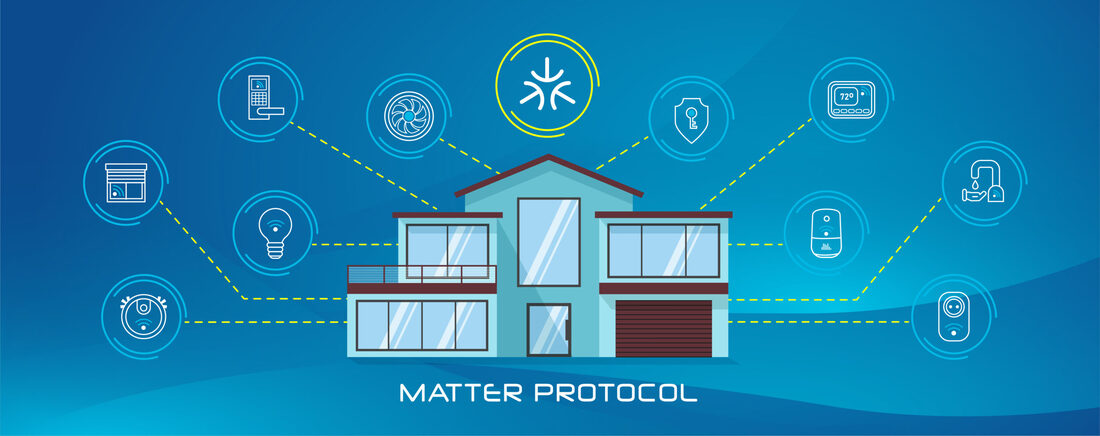
It might not immediately occur to you that companies like Amazon, Apple, and Google would be the ones to start cooperating on a common goal. However, their smart platforms - Alexa, Siri, and Google Assistant, have collectively been the face of the smarter home movement since 2019. They and every other smart home company that has joined have serious incentives to sort things out, and so that you, as end customers, invest in a true smart home experience. The CSA says that thousands of engineers in participating companies are creating the specification and certification. The initial release of Matter will run on Wi-Fi and Thread and will utilize Bluetooth Low Energy. The first products with Matter certification should start shipping as early as the end of 2022.
With the Matter protocol, you will be able to expand your Smart Home with any device
With the Matter standard, you no longer have to investigate whether a desired product "Works with Alexa", "Works with FIBARO", "Works with Google Assistant", or "Works with Apple HomeKit". If all these ecosystems operate with a single standard, you can base your purchasing decision solely on the quality and price of the product – and you do not have to completely ignore devices based on the fact that they do not support your preferred standard. The alternative to connecting smart home devices through a single standard could thus dramatically expand your options. The goal of the Matter initiative is to create a smart home world where Matter is as ubiquitous as Wi-Fi.
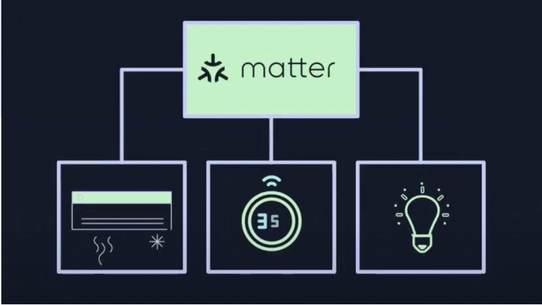
When purchasing a product supporting Matter from our e-shop, you will no longer have to worry about the question: "I hope this will work with the type of Wi-Fi protocol I have at home." We have all gotten used to adding any device we want to our home internet network because Wi-Fi standards have long been well resolved at this point. When Matter launches, you will do the same with smart home devices. You will look for the supporting Matter logo on the product, order it home, and after a step or two on your smartphone and a simple Bluetooth exchange with the device, it will become part of your smart home ecosystem. The days of seriously considering changing your entire smart home platform just to get the product you really want into your smart home will become a thing of the past forever.
Matter unifies the user experience
Currently, controlling smart home devices via a unified interface is highly questionable. There are plenty of issues that can arise, from synchronizing the status of a smart home device to accessing specific functions. It is not uncommon for many people to control their smart home via a specific dashboard, but then they still need to open individual apps to have complete access to all features.
In other cases, two different ecosystems might not communicate at all, so you will have a control panel that handles 80% of your smart home's needs, and then there are a few apps left that you need to open to do certain things or set up additional schedules.
Matter includes a core feature called "Multi-Admin", which will allow you to easily add products to the Matter system while linking them in a way that suits not only you but also everyone else in your household. Everyone can interact with various elements of the smart home in the way that best suits their needs, without the need for other apps, subsequent logging in, and ultimately without a headache :)
What will be the biggest advantage of the Matter protocol?
Ultimately, one of the best things about Matter will not be the "under the hood" tweaks that the average user rarely gets into, but the savings. In general, everyone saves when systems become more efficient. You, as an end user, will save money because you will have to buy fewer products to achieve your smart home goals (and you will also rarely replace these products with new ones, as they will be part of your smart home built on Matter). Building your smart home from scratch because a new product came out and your old platform does not support it will thus become merely a thing of the past.

In addition, large and small companies in the smart home market will be able to reduce their costs and focus their energy on creating interesting and useful things instead of spending time constantly adhering to multiple concurrent smart home standards. A product that might not have made it to the market five years ago because supporting multiple platforms was too costly might now have a chance because we will be able to plug it directly into the Matter ecosystem.
What happens to current standards and your smart home devices?
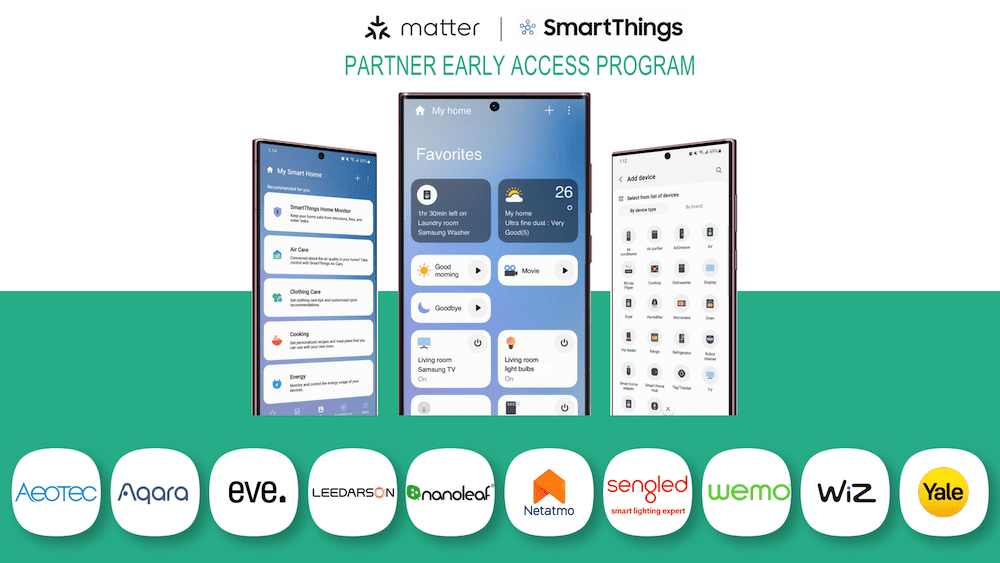
Anyone who has been in the smart home world long enough knows exactly how frustrating it is when newer, improved versions of products arrive and all your existing equipment becomes obsolete. The people behind Matter, however, have put a lot of effort into creating something that covers as much existing smart home equipment as possible. New products will be natively compatible, and older products can be introduced into the new smart home ecosystem via updates or a border router - Thread.
Thread is a new connectivity standard that will work alongside the Matter protocol, not against it. It basically works as a mesh network technology that allows devices to connect to other devices on the network, instead of having to connect directly to one hub or router. Many Matter devices will work over Thread.
This could mean a theoretical end for some other standards, at least when it comes to consumer smart home standards. Matter, at least initially, will operate over Internet Protocol (IP). This means it will probably not run on top of standards like Z-Wave. However, this does not exclude that Z-Wave devices will never work with Matter – but in the current situation, it could mean that you would need, for example, a hub or bridge to connect everything together. This situation is exactly the same today; to enjoy the benefits of Z-Wave or Zigbee over WiFi, a controller unit is required. If a manufacturer like FIBARO or Homey decides that their control unit will support Matter, then the transition will be completely simple. Preliminary information suggests that these systems will indeed operate under Matter.
Zigbee, however, should be a completely different case. The Zigbee Alliance actually rebranded into what we now call the Connectivity Standards Alliance (CSA). It is therefore highly likely that Zigbee will merge with Matter in some way at least, and it is even quite realistic that these two standards will merge entirely. Even here, however, the situation with the need for a control unit remains. With Zigbee, it is often an Amazon ECHO that controls your Zigbee network.
So we can briefly summarize that if your current smart home device uses Wi-Fi, Ethernet, or Thread to communicate, there is a good chance it will work with Matter. And if not, there will likely be a bridge created by the manufacturer or a third party that will help bring it into the Matter ecosystem. For example, Homey Bridge will be updated to work with Matter, while other companies will release new cheap bridge devices that will support Matter and integrate all their legacy hardware into the new smart home ecosystem.
Should you wait for now before buying new smart home devices?
We are currently in an awkward period between the announcement of Matter and its actual arrival. Given that Matter will probably be launched in the second half of 2022, many consumers will likely wonder whether they should or should not continue investing in their smart homes or rather wait.
Our opinion is that customers should continue building their smart homes with peace of mind. It is important to do it thoughtfully, as you will get the experience you desire today, and best of all, your equipment will not gather dust even after the release of the Matter protocol. For inspiration, if you are currently considering, for example, buying new thermostats for your smart home, you are of course aware that they do not have an active Matter protocol (because it is not available yet). But you already know that if these thermostats are based on Wi-Fi or the manufacturer has stated that their products will be updated, such thermostats will be fully compatible with the new ecosystem even after the release of the Matter protocol. Therefore, do not panic and choose the product that makes sense to you. If you need help choosing products, or are not sure how to proceed with building your smart home, be sure to contact us. We will be very happy to advise you and willingly answer your questions.
We don't know about you, but we are very glad that we will not only save some money, but also see even better and more diverse smart home products. There is still a bit of a wait, however, as the Connectivity Standards Alliance (CSA) continues to improve and finalize the Matter protocol, while smart home manufacturers worldwide adopt and integrate this standard.