
🌐 How Smart Sensors Power Home Automation
It is thanks to smart sensors that a home becomes truly automatic. Without them, Homey can control your devices, but it cannot react to what is happening around you. Sensors are what tie everything together into one functional ecosystem.
They let Homey know when someone enters a room, when a window is opened, when the air quality drops, or when water appears where it shouldn't be. Thanks to this, your home can react completely on its own.
If you are wondering where to start or just want to get a better idea of the possibilities, here is an overview of the types of sensors you should definitely know about.
🛡️ Security and Safety Sensors
These sensors give Homey an accurate overview of what is happening inside and around your home. Most of the time, they just work quietly in the background and only let themselves be known when a change occurs.
🪟 Contact Sensors (Doors and Windows) 🪟
Contact sensors track whether a door or window is open or closed. A small magnet is attached to the moving part, and the sensor itself to the frame. When they separate, Homey immediately knows that the door or window has opened.
They are most often used to monitor entry points or to prevent heating a room with an open window. A Flow can turn off your smart heater the moment a window opens, so you don't waste energy heating the outdoors.

The FIBARO contact sensor works perfectly with the Homey system.
🚶♂️ Motion Sensors (PIR) 🚶♂️
PIR motion sensors, which stands for passive infrared sensors, detect heat signatures moving within their field of view. They are fast and reliable for detecting movement in hallways, driveways, or near entry points. However, they are not ideal for detecting a person who is standing or sitting completely still. If you sit still long enough, the sensor will assume the room is empty.
You can use them to automatically turn on lighting in areas where people are constantly moving, or to send a notification when someone approaches your front door while you are away.
🔍 Presence Sensors (mmWave) 🔍
Presence sensors solve the main shortcoming of classic motion sensors. The mmWave radar technology can detect even the slightest movements, such as breathing or shifting in a chair, allowing Homey to always know precisely whether someone is actually in the room.
This makes them ideal for spaces where you spend time sitting, such as an office or living room. A Flow can keep your desk lamp or radiator turned on as long as the sensor detects you, and turn everything off only when you truly leave.

Presence sensors use mmWave radar technology to detect static human presence.
📳 Vibration and Tilt Sensors 📳
These sensors use an internal accelerometer to detect impacts or changes in angle. They can detect movements that a standard contact sensor would completely miss.
Attach one to a washing machine, for example, to get a notification when the wash cycle is complete, or place it on a valuable item to get alerted if someone tries to move it.
🔊 Sound and Noise Sensors 🔊
Sound sensors monitor the ambient noise level and can distinguish between background noise and sudden, sharp sounds. They allow the Homey system to react to sound, even in rooms without a camera.
A common use case is detecting the sound of a classic, non-smart smoke detector, or sending a notification when the dryer finishes its cycle.
💧 Water Leak Detectors 💧
Water leak detectors are placed horizontally on the floor and activate when moisture touches their bottom contact points. They are small, affordable, and if placed in the right locations, can prevent serious property damage.
Place one under the sink, behind the washing machine, or near the water heater. Pair it with a smart water valve in Homey, and a Flow can automatically shut off the main water supply as soon as a leak is detected.
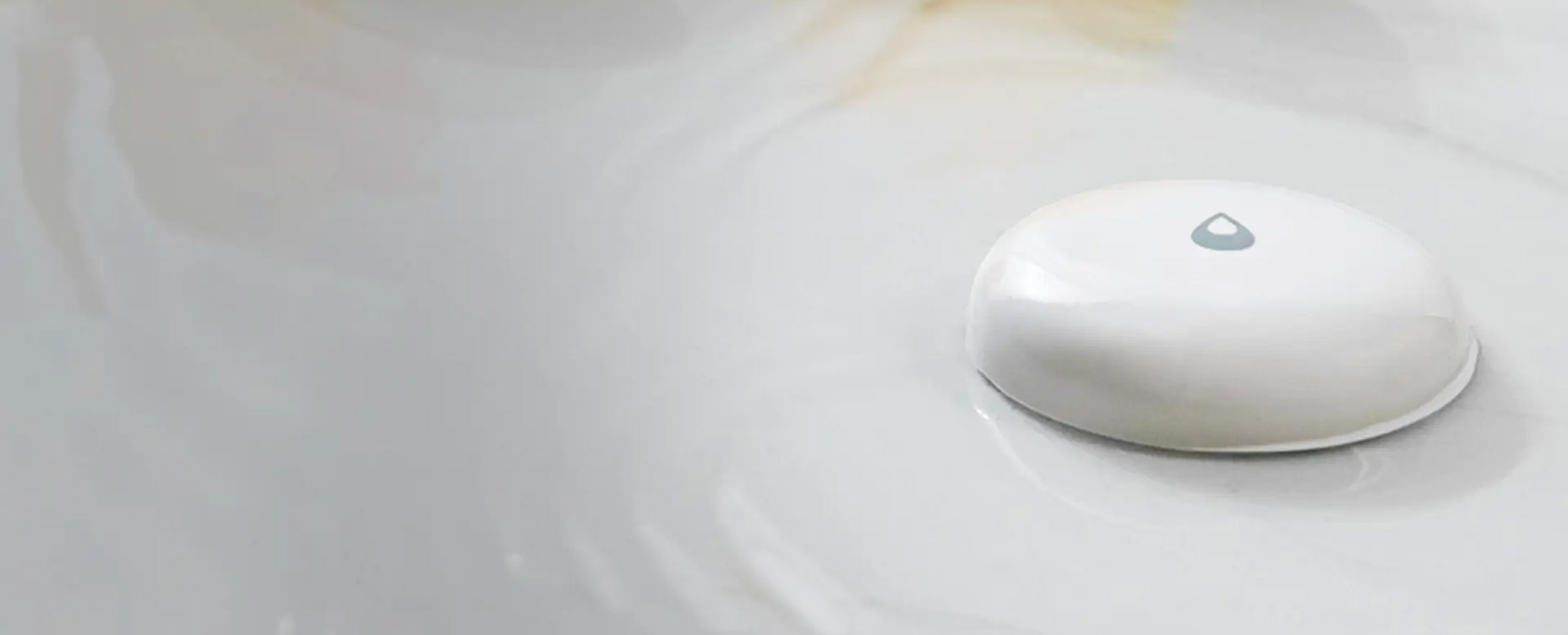
The Aqara water leak sensor is small, powerful, and lasts for years on a single battery.
🔥 Smoke and Carbon Monoxide (CO) Detectors 🔥
Smart smoke and CO detectors do everything a standard alarm does, but they also communicate with Homey. This means that detecting danger triggers more than just loud beeping. It can trigger protective actions throughout the entire house. For example, a Flow can turn all the lights in the house bright red and unlock all smart locks the moment smoke is detected, giving everyone a clear signal and a free path to escape.

Smoke and CO sensors protect your home from fires and poisonous gas leaks.
🌫️ Radon and Gas Sensors 🌫️
These sensors monitor threats that you cannot see or smell. Radon sensors track long-term exposure levels in your home, while gas detectors track methane or propane leaks near stoves and boilers in real-time. A Flow can then alert you via smart speakers or immediately shut off a smart gas valve as soon as dangerous levels are detected.
🌿 Comfort and Environmental Sensors
These sensors monitor conditions in your home, allowing Homey to maintain a pleasant and healthy environment completely automatically, without constant manual intervention.
🌡️ Temperature and Humidity Sensors 🌡️
Temperature and humidity sensors are the absolute foundation of automated climate control. They are small, battery-powered, and easy to place exactly where they are needed most. This makes them a much more flexible solution compared to a single central wall thermostat.
Place them in rooms that tend to get too hot or cold, allowing Homey to get a more accurate picture of the real climate in your home. It's good to know that many other smart devices (such as motion sensors) also report temperature and humidity alongside their main function.
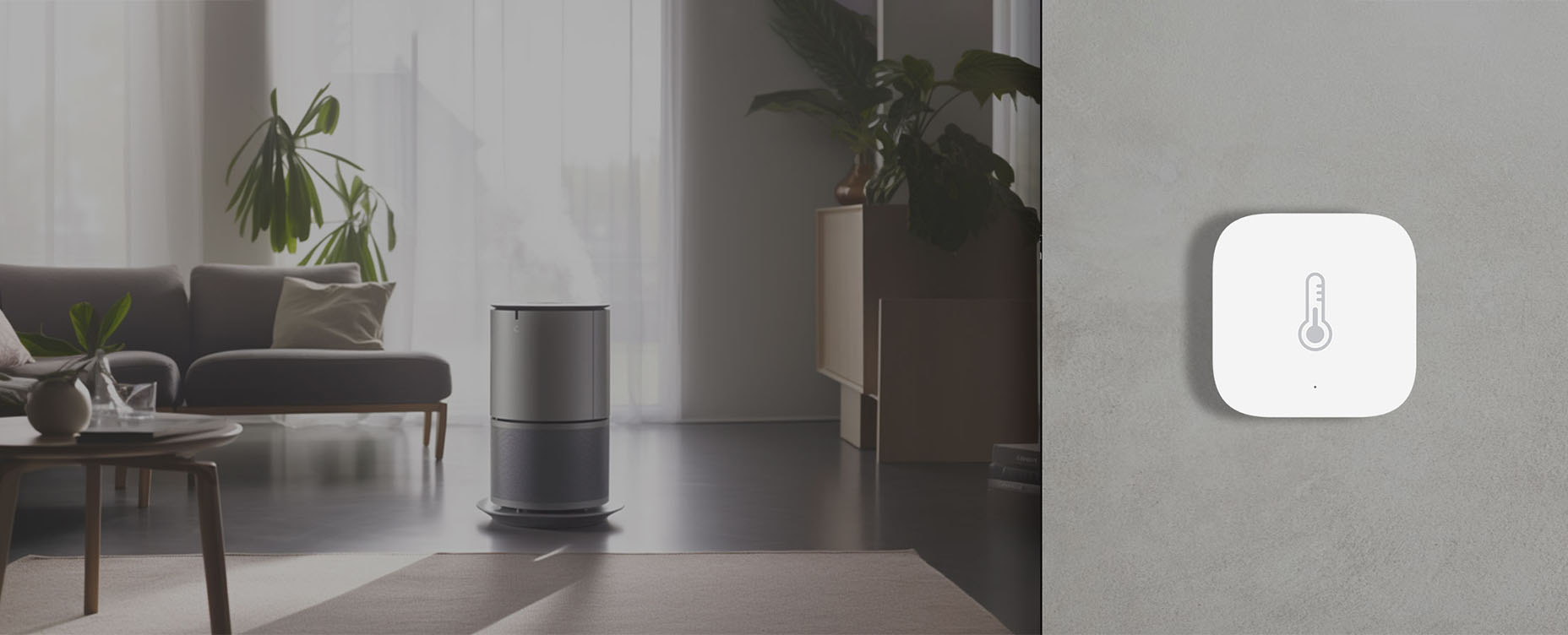
Smart temperature and humidity sensors can be installed anywhere.
🌬️ Air Quality Monitors and VOC Sensors 🌬️
Air quality monitors track CO2 levels, particulate matter (PM2.5), volatile organic compounds (VOCs), and other pollutants that directly affect how you feel at home and how well you sleep.
Modern homes are often excellently insulated, but not always sufficiently ventilated. This makes these sensors particularly useful. A Flow can, for instance, turn an air purifier to its highest speed when a spike in pollutants is detected, or issue a command to open a smart window or start the ventilation system when the CO2 level crosses a set threshold.
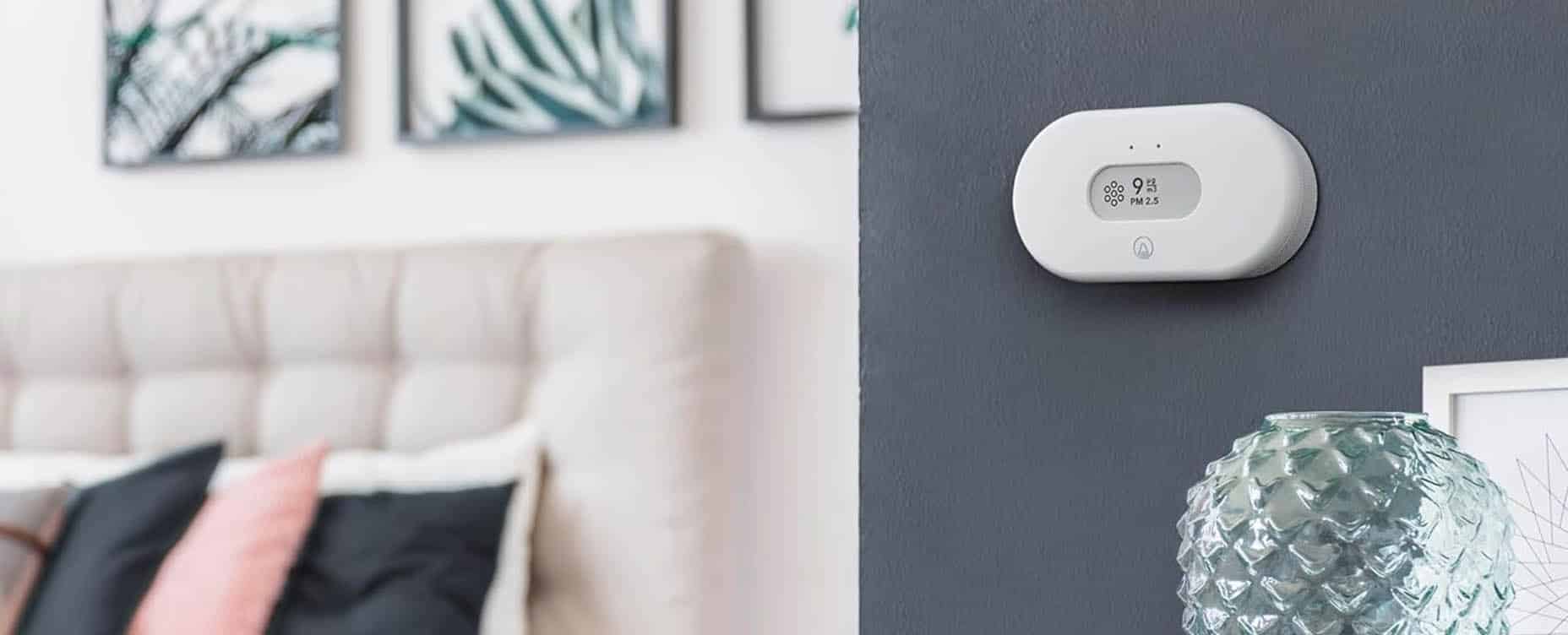
Air quality monitors track CO2, PM particles, VOCs, and other pollutants in your surroundings.
☀️ Light and UV Sensors ☀️
Light sensors measure ambient illumination in lux, while UV sensors track the intensity of solar radiation. Together, they provide Homey with the precise data needed for smart control of blinds and outdoor lighting—based on the actual light outside, not just the time of day.
A Flow can lower the blinds in the living room during the hours when the sun is strongest to prevent the interior from overheating, or extend the patio awning when the UV level rises too high.
🌧️ Wind and Rain Sensors 🌧️
Wind and rain sensors act as a small weather station for your home. They detect when it starts raining or when wind speed rapidly increases. This allows your outdoor automations to react before extreme weather causes problems.
You can use them to automatically retract an awning when a storm approaches, temporarily pause garden irrigation during heavy rain, or have your robotic lawnmower return to its docking station before it gets soaked.
🌱 Soil Moisture Sensors 🌱
Soil moisture sensors use electrical conductivity to measure whether your soil is dry, moist, or saturated with water. They ensure more precise watering and help prevent plants from drying out, as well as from being overwatered.
Place them in flower beds or indoor pots and connect them via Homey to a smart irrigation valve. A Flow will then trigger watering precisely and only when the soil truly needs it.

⚡ Energy and Utility Sensors
These sensors constantly monitor how your household uses electricity, water, and gas. They provide Homey with the key data needed to prevent waste and uncover unusual consumption patterns.
📊 Smart Energy Monitors 📊
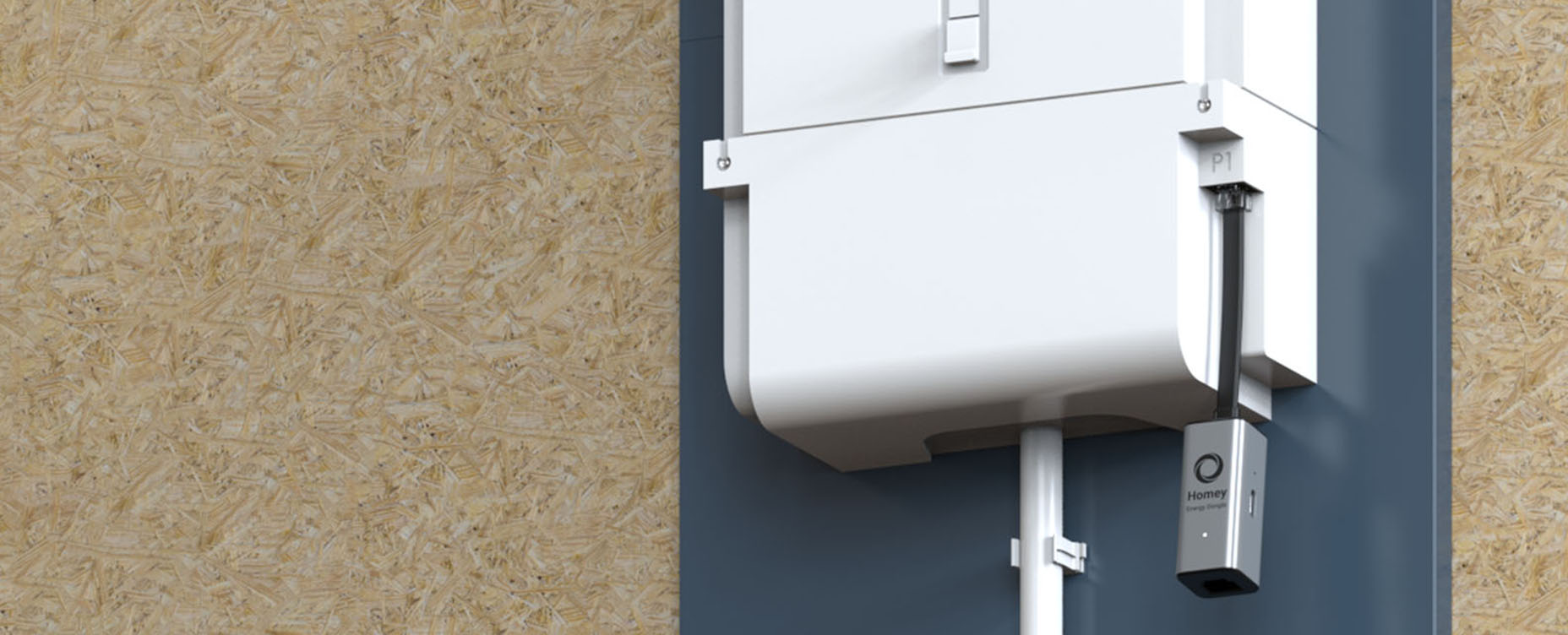
Smart energy monitors are installed in the electrical panel or directly into sockets to accurately track your energy consumption in real-time. They clearly show you which appliances draw the most power and exactly when this happens. Thanks to this, you can shift energy-intensive tasks to cheaper (or greener) time periods.
Homey supports several methods of consumption monitoring. Devices like the Shelly 3EM or Qubino Smart Meter measure the consumption of the entire household directly on the phases. This data is then sent to the Homey system, where you can work with it further.
🚰 Smart Water Meters 🚰
Smart water meters monitor the current flow and total volume of water passing through your main pipes. They can detect everything from a slightly dripping faucet to a hidden micro-leak, giving you a much clearer picture of your actual daily water consumption.
A Flow can even automatically shut off your main water valve if the meter detects a continuous flow of water lasting longer than, say, 30 minutes. In this way, the system can stop a leak before it turns into a disaster.
💨 Smart Gas Meters 💨
Smart gas meters precisely track the volume of gas consumed by your heating and cooking appliances. They help you better analyze heating costs in the context of outside temperatures and detect unusual patterns in your consumption much faster. A Flow can immediately alert you if gas is consumed at a time when your heating and stove should be completely turned off.
🔋 Solar and Battery Monitors 🔋
These monitors detail how much energy your photovoltaics generate and how much is currently stored in your battery storage. This data most often comes directly from your inverter or smart battery via a local LAN or cloud integration into Homey.
If Homey has this data available, it can use Flows to run the washing machine, heat domestic hot water, or charge an electric vehicle exclusively when the panels are producing more energy than your household is currently consuming. This approach helps you maximize the use of your own, free solar energy.
🏠 Smart Sensors in Homey
The Homey hub connects all these different types of sensors into one interconnected system. It natively supports Zigbee, Z-Wave, Wi-Fi, Bluetooth, 433 MHz, Thread, and Matter protocols. Thanks to this, you can freely combine devices from dozens of different brands without any need to buy their original standalone hubs or switch between multiple apps on your phone.
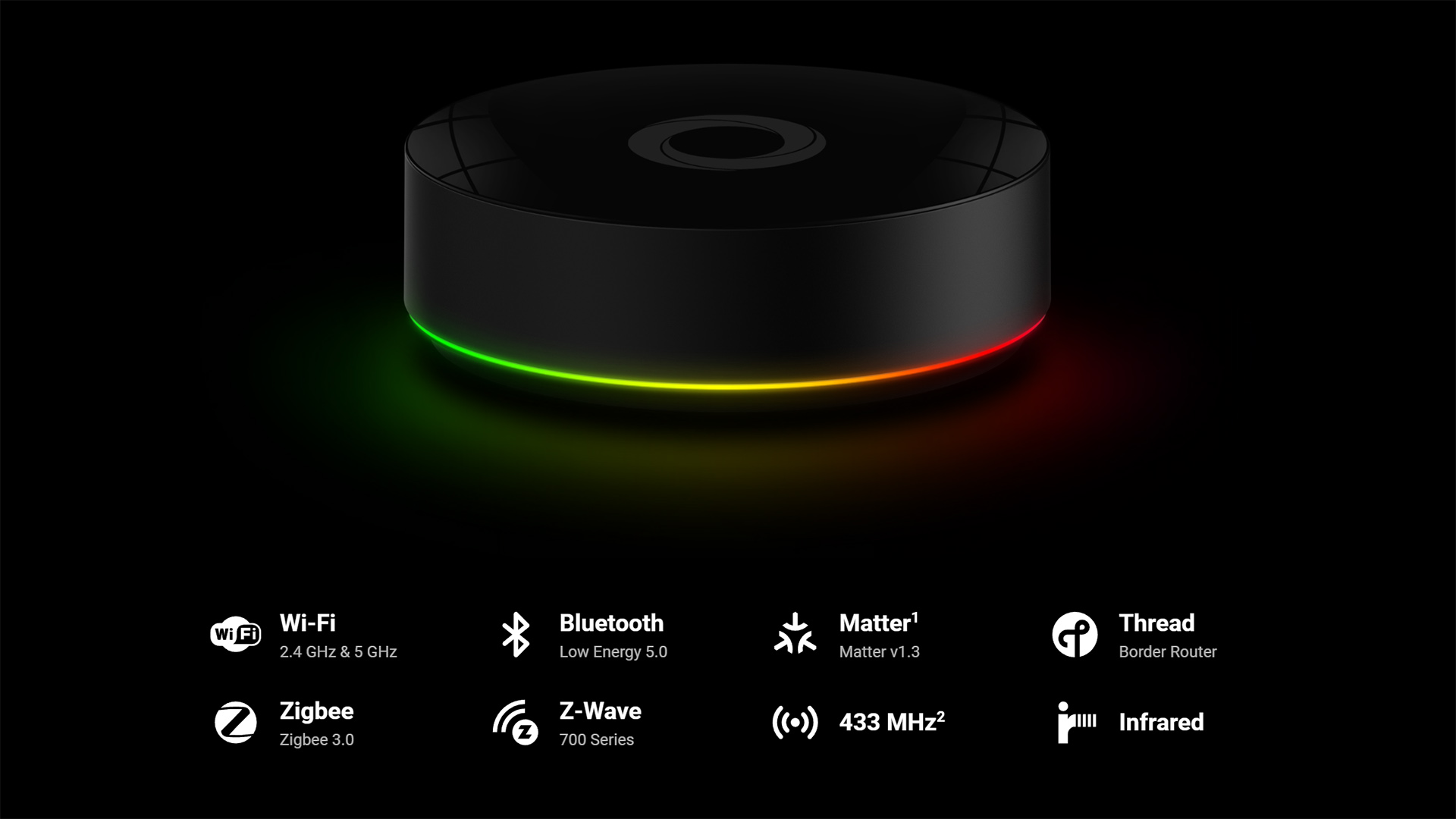
Homey Pro natively supports up to 8 different wireless protocols used by smart sensors worldwide.
The true power of the entire system lies in combining sensors within Flow and Advanced Flow automations. A presence sensor and a light intensity sensor can perfectly orchestrate turning on and dimming the lights, and subsequently adjusting the thermostat the moment you settle into the living room in the evening. A water leak detector can quickly communicate with a smart valve to protect your home from flooding while you are away.
The sensors themselves only passively report to their surroundings what is currently happening. But paired with the Homey system, they turn into the eyes and ears of your home, giving your automations true context and meaning.