
How to Measure Energy Consumption in the House?
The year 2022 brought us new worries that we had somewhat forgotten to think about. We barely dug ourselves out of the pandemic, and now there is the war in Ukraine. Alongside everything related to this, these events affect us with rising inflation and, of course, increasing energy prices. In this article, we won't focus on how to save on energy, but rather on how to get a perfect overview of your energy consumption.
What Consumption in the House Can Be Measured
When measuring household consumption, we have three options:
- Measuring the consumption of individual appliances
- Measuring the total consumption of the household
- A combination of individual device and total household measurement
Of course, what we will measure depends on what your needs are. As a first step, it is always ideal to decide whether it is more important for you to know how much power your fridge, washing machine, and other appliances use—in which case measuring directly on the devices is more suitable. But if you want to have an overview of your house as a whole, meaning how much is consumed daily, including the very last appliance you would even think to measure, then measuring the entire house's consumption is a better approach. Naturally, a combination of these two methods is also possible. All methods have their pros and cons, so let's break them down a bit more.
1 - Measuring the Energy Consumption of Individual Household Appliances
As I mentioned, the main advantage of this measuring method is that you get an overview of the consumption of specific appliances. You can separately check how much power your fridge, washing machine, or even your lights and TV "eat up". This is obviously a huge advantage when you are looking for the biggest energy hog in the household (let me give you a hint: it's the boiler or the electric heater). Since this method allows you to report the real-time consumption of connected appliances and track consumption trend graphs, you can get a very nice overview of where your money is going. A secondary benefit of this solution is that you can also turn the devices on and off using the app. However, the disadvantage is quite obvious. To thoroughly measure all the appliances in the house, you need to have every single one connected to a measuring device. And this brings us to the point where, for example, to measure how much power your bedside lamp draws, you will need one Smart plug; to measure a second lamp, you'll need another; to measure a ceiling light, you'll need a built-in module; then there is the radio... So, the main downside of this measurement method is that if you truly want to measure everything, you need a lot of measuring devices. Here, a strange effect occurs aside from the fact that it becomes very expensive. If you want to measure every single appliance, you might need, say, 50 smart plugs. Each Smart plug also consumes power on its own—even if individually negligible, around 1W. However, when you have 50 of them at home, this consumption jumps up to 50W. So, you are essentially increasing energy consumption for the sake of measuring it, which defeats the purpose.
So, when should you measure energy on individual appliances? It’s simple: basically, when you are only interested in the actual energy hogs. You know you have a fridge, an electric boiler, an electric heater or electric underfloor heating, a TV, and that old freezer in the basement. These appliances make up the bulk of your consumption. Separate measurement pays off here because you can, for example, clearly track the impact of defrosting the freezer, lowering the room temperature by one degree, reducing the water temperature in the boiler, or turning off the boiler when leaving the house. As I mentioned before, the side benefit of this solution is that you can remotely turn the device on and off through the same app.
How to measure the energy consumption of individual household appliances?
The easiest way to measure energy consumption is by using Smart plugs. You simply plug them into the wall socket, and then plug the appliance you want to measure directly into them. From that moment on, you have an overview in the app of real-time, daily, weekly, or monthly consumption (depending on the app). Naturally, smart plugs come with various protocols, are designed for different systems, and have different add-on features. Therefore, we've selected a few types from our catalog.
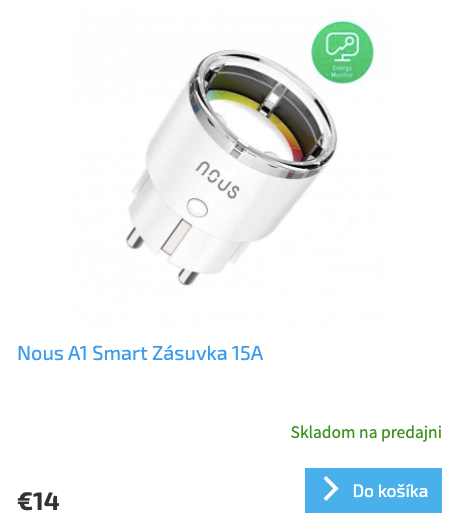
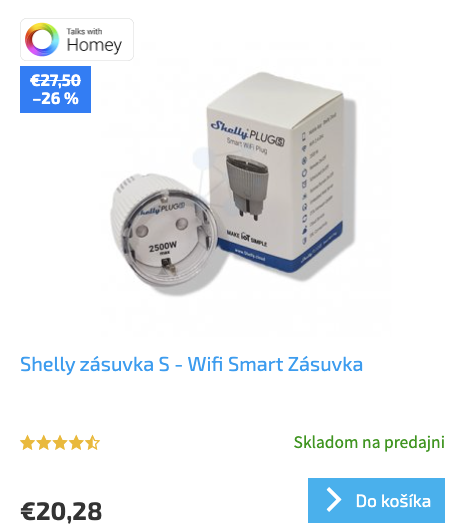
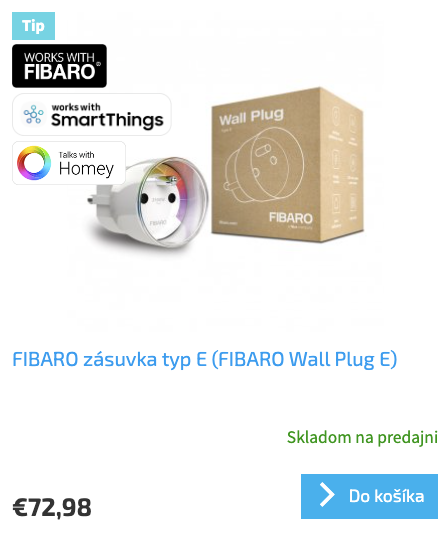
Of course, besides all these Smart plugs, there are other components like relays, dimmers, LED strip controllers, or sensors. The plugs from Nous, Shelly, and FIBARO are intentionally shown here because each is supported in a different ecosystem, so it is good to check out other products to get a full picture. These three systems also differ in price. TUYA products are the cheapest, Shelly products (despite being WiFi) range from budget to premium, and FIBARO is a high-end system with a higher price tag but excellent functionality.
2 - Measuring the Consumption of the Entire Household
This method has its advantages and disadvantages practically reversed compared to the first case. With a single device—an energy meter—you measure the entire house, literally nothing escapes you, not even the last LED indicator in the house, and since it is just one product, its own power consumption is negligible and the cost doesn't multiply with the number of measured devices. The main disadvantage is that you cannot tell from the data exactly which specific device consumed how much energy, and you cannot control the devices individually (theoretically, you can only control a contactor installed behind the meter). However, this solution is currently very attractive because it gives a true overview of the total consumption. You can beautifully measure how much energy your house consumes when you are home, when you sleep, when you are away... Based on these results, you can monitor the impact of measures such as lowering the heating temperature, completely unplugging the TV instead of leaving it in standby mode, and so on. Even though you don't have meticulous data on how much each appliance draws, that doesn't prevent you from tracking continuous savings after applying certain energy-saving habits.
Even when measuring whole-house consumption, we have several options on how to do it. In this case, we will show the two most popular ones. The first option is the Qubino smart energy meter, which works flawlessly in the FIBARO system. The second is the Shelly 3EM, which is the best-selling energy meter partly because it doesn't require any central hub; it simply needs a WiFi connection.
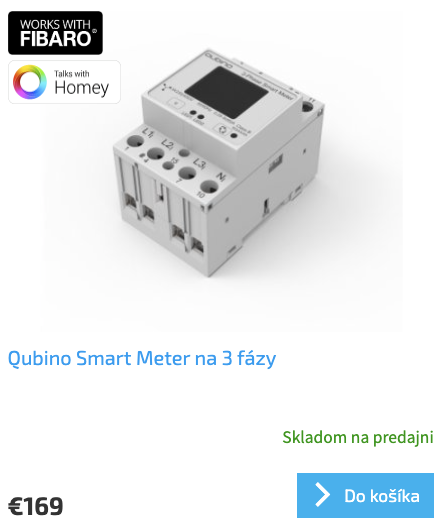
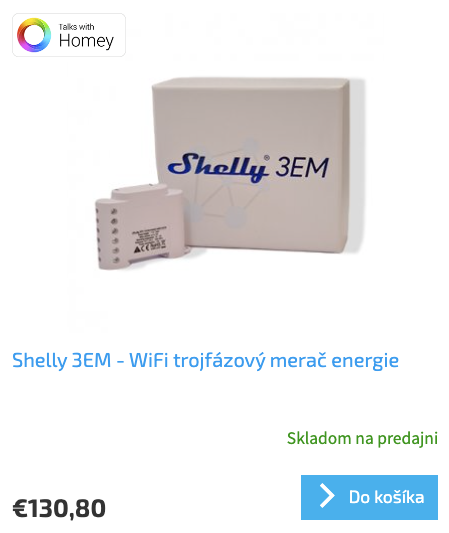
Even in this case, it is possible to use energy meters in conjunction with other Smart Home elements. The Qubino energy meter can be used in Homey or FIBARO systems, and the Shelly 3EM also works in the Homey system or directly within the standalone Shelly ecosystem. Both of these energy meters beautifully track energy consumption on each phase as well as the total output.
3 - A Combination of Total Consumption and Individual Device Measurements
That's right, there is an excellent way to combine these measurements. How it works is very simple: the main energy meter measures the consumption of the whole house, while smart plugs measure the consumption of individual, large appliances. All the mentioned systems allow correct setup for such a configuration, meaning you can designate in the system that the main meter measures the total consumption and individual smart plugs only measure sub-consumption. Thanks to the correct setup, your data won't duplicate in the daily, weekly, or monthly consumption overviews, giving you an always-accurate report. And this is exactly what allows you to have the overall house consumption under control while still keeping a close eye on individual energy hogs.
Energy Consumption Measurement and Photovoltaics
The number of power plants on the roofs of family homes is growing, and with it the need to measure energy production, surpluses, and proper management. The great news is that the mentioned energy meters are also suitable for measuring energy production or for measuring energy demand from the grid and feeding energy back into the grid. This second option is especially great if you are using a virtual battery. With the correct measurement settings, you can track how much energy you delivered to the grid over a year, how much you drew, and in some systems, you can even set a return coefficient—the percentage of the price you pay when taking energy back into the household.
In the FIBARO system, it is also possible to import data from inverters, which gives you the ability to manage surpluses in the house so that you consume as much energy directly as possible—because the energy you produce and consume immediately is the absolute cheapest.
Finally, take a look at an example of how beautifully the energy panel is processed in the FIBARO system, where, thanks to correct wiring, you get a massive amount of information on consumption, production, self-sufficiency, and return on investment.
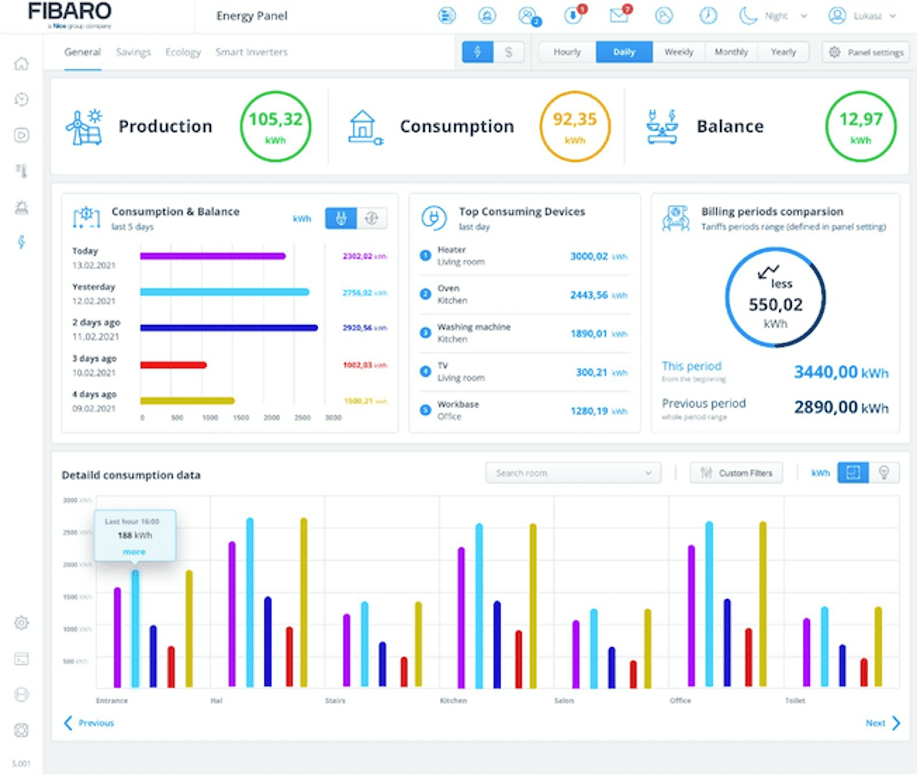
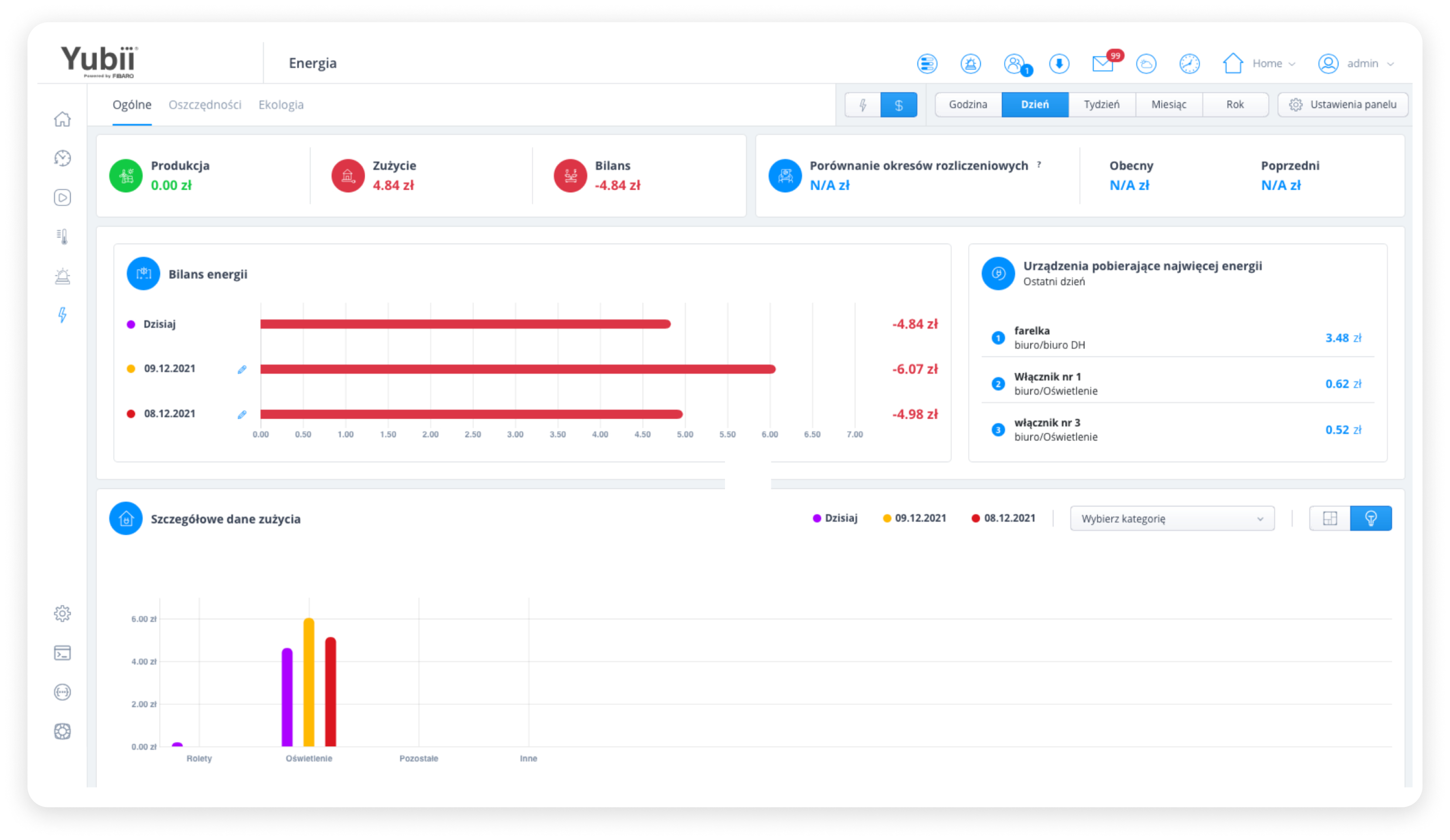
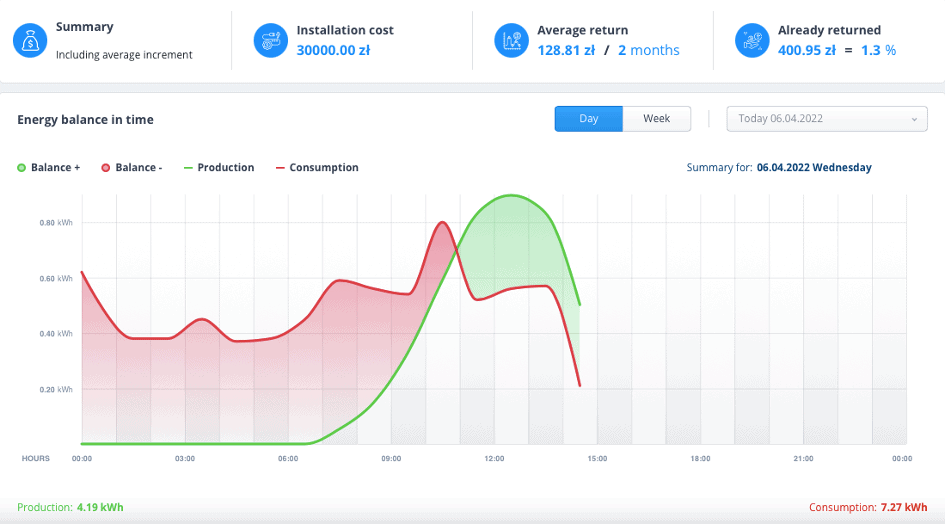
And the list of features is constantly growing.
Conclusion
We believe you have gained a proper overview of the options available for measuring energy consumption, and we believe that together we will manage to overcome the energy crisis.
Yours, HomeSystem