
What is Zigbee and how can it make your life easier?
Have you been dreaming of a Smart Home but aren't exactly sure how it all works and what you will need? The Zigbee protocol will help you connect a variety of smart devices and control them effortlessly!
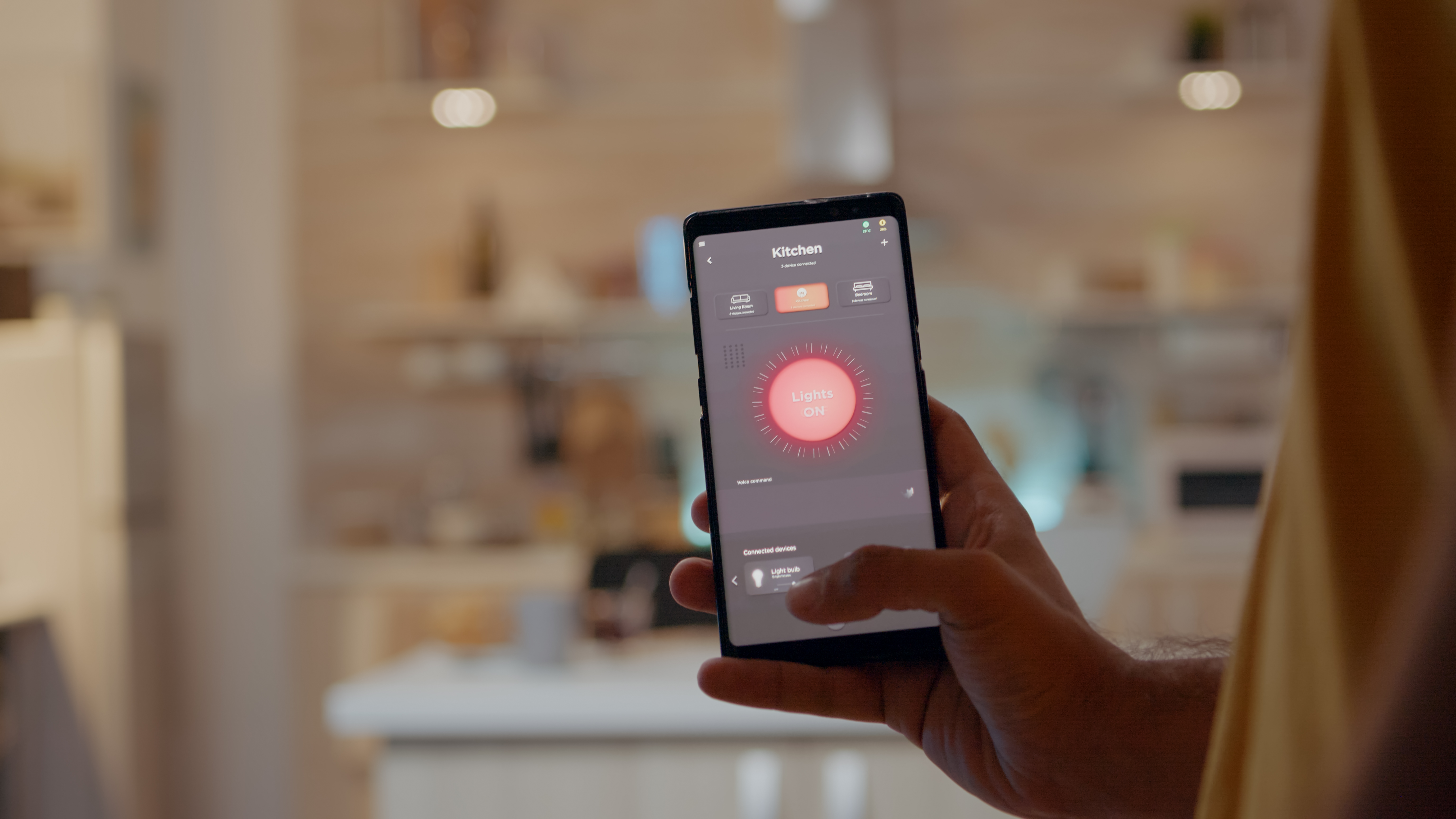
The Zigbee protocol simplifies the functioning of your household.
How does Zigbee actually work?
Zigbee is an open protocol that plays a crucial role in the IoT (Internet of Things). It is a smart tool that can control Smart Home devices from different brands. The advantage is that it maintains their mutual compatibility and allows for easy control. It is described by the IEEE 802.15.4 standard and operates in the unlicensed bands of 868 MHz, 902–928 MHz, and 2.4 GHz, being a part of PAN networks alongside Bluetooth.
You probably know that using a large amount of technology affects the human body, but Zigbee emits 4,000 times less radiation compared to smartphones.
Several globally known companies, whose products and appliances you likely have at home, have contributed to the development of Zigbee. These include Siemens, Xiaomi, Bosch, Samsung, and Philips. The Zigbee Alliance was formed in 2002 to group these brands together.
You don't have to buy smart devices from just one manufacturer; the central Zigbee hub allows different products to interact seamlessly. It also simplifies their management. It's up to you whether you want to configure them via a smartphone, tablet, or computer—with Zigbee, you can do it effortlessly.
What are the benefits of a Zigbee Gateway?
In short – home automation. Thanks to Zigbee, your Smart Home can feature automated heating, air conditioning, switching lights on and off, and anti-theft security systems. This means that smart gadgets will save you a lot of time that you can dedicate to other activities. They take care of your comfort as well as your security.
The benefits of the open Zigbee protocol include secure wireless communication and the ability to control devices from any room in the house, or even remotely. If you are currently at work and need to turn on the heating at home, a few clicks on your mobile phone are all it takes.
You will appreciate the simple and fast installation, low purchase costs, and minimal electricity consumption. As mentioned earlier, Zigbee allows products from different brands to cooperate, but before buying them, we recommend checking whether the manufacturers of specific devices have enabled mutual compatibility between their models.
The Smart Home is becoming increasingly popular because it saves energy
A smart household isn't just about comfort, but also about security and reducing energy consumption. Let's be honest, in times when our energy future is uncertain and energy prices are constantly rising, everyone wants to save wherever possible. With winter approaching, it makes sense to leave the heating to smart systems that can evaluate the temperature setting based on your habits.
Rooms that are well-lit by the sun during the day often do not even need to be heated. After family members leave for work and school, the smart system automatically opens the blinds or roller shutters, letting the sun warm the space. Zigbee also ensures that lights are not left on unnecessarily in empty rooms. Many people tend to leave lights on throughout the entire apartment or house, wasting both energy and money. Automatic light switching will be a great benefit for any forgetful person.
What can a Zigbee 3.0 controller do?
Zigbee has a long tradition; the history of self-organizing digital networks dates back to 1990. Currently, the most up-to-date version is Zigbee 3.0, which is backward compatible with older devices in addition to the newest ones.
It can operate motion sensors, energy consumption meters, smart gas, smoke, and fire detectors, electrical locks and sockets, alarms, lighting, air conditioning and heat recovery units, security systems, blind and garage door control modules, as well as temperature, humidity, or CO2 sensors.
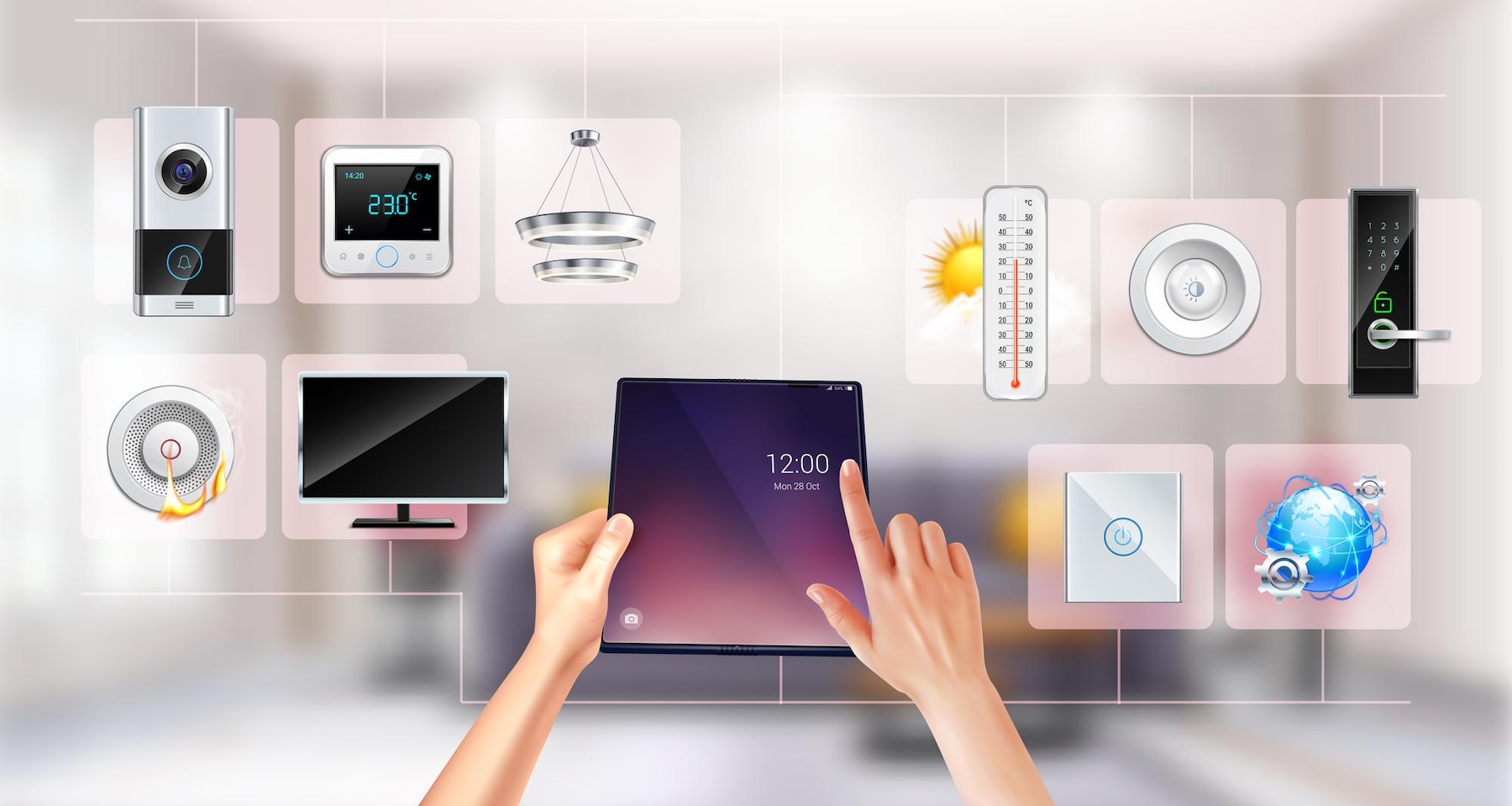
The Zigbee controller is versatile and compatible even with older devices. Source: tech4gods.com
Zigbee vs. Z-Wave – what is the difference between them?
Both protocols are excellent wireless solutions for Smart Home automation, but they differ in their specifications and applications, making them suitable for different uses. Understanding the differences between Zigbee and Z-Wave can be complicated for a layperson.
However, devices with Zigbee technology can transmit data over longer distances (more than 100 meters) because they forward all incoming data packets. This is called Mesh networking, and its principle lies in creating a network through nodes.
These nodes can communicate with other nodes. Simply put – the more nodes, the more stable the network. The networks are secured with 128-bit symmetric encryption keys, and their speed is up to 250 kbit/s. This is ideal for transmitting data from small devices such as locks, switches, sensors, and the like.
Compared to Zigbee, Z-Wave is more energy-efficient and ensures two-way communication. In practice, this means that a device receives a signal to turn off, and as soon as it does, it sends back confirmation that it has actually turned off. Both protocols have their pros and cons, but Zigbee provides greater flexibility. Despite being a relatively complex protocol, it is a highly versatile wireless solution that continually expands its features and uses.
Raspberry Pi – Zigbee
RaspBee II is a universal Zigbee gateway that does not require the Cloud. It brings Zigbee manufacturers under one system, has a strong range thanks to an amplifier, and is compatible with popular Open Source systems. RaspBee II operates on the basis of local communication. This means that when you plug it into a Raspberry Pi, you can immediately add Zigbee devices, which then no longer need to be connected to the internet.
Wi-Fi and Zigbee signal repeater for the socket
It is common for the Wi-Fi signal to be weaker in some parts of the apartment or house. The same applies to the Zigbee signal. To improve signal quality, the Aeotec Range Extender Zi can help. Just plug it into a socket, and it immediately optimizes the performance of your Smart Home. It has a range of up to 100 m, ensuring a signal even in the furthest corners of the household.
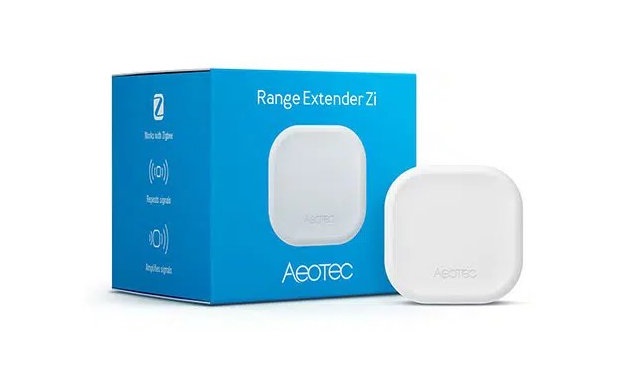
Get a better signal thanks to a Zigbee repeater.
Are you thinking about how to effectively deal with rising energy prices? Smart devices will help you with that. Write to us at info@homesystem.sk or call us at +421 948 213 492, and we will help you make the right choice.