
How to wire a two-way staircase switch: diagram and steps
A two-way switch (staircase switch, wiring No. 6) turns one light on and off from two places, for example at the bottom and top of the stairs or at both ends of a hallway. In this guide you will find the wiring diagram for 2 and 3 places, wire colours, how to wire an intermediate switch and a double 6+6 switch. We also show how to add a third control point without chasing walls and control the stairs from your phone.
In short: what you need to know
- 2 places = 2× switch No. 6Two traveller wires run between the switches. Live goes to the common terminal of the first switch, the second switch feeds the light.
- 3 or more places = add No. 7An intermediate switch goes between the two two-way switches. Or add a wireless button with a smart relay, no new cables.
- Work with the power offSwitch off the breaker and check with a voltage tester. Wiring to 230 V is a job for a qualified electrician.
How a two-way switch works
A standard switch (No. 1) has two terminals and either closes or opens the circuit. A two-way switch has three terminals: one common (often marked L, P or with an arrow) and two travellers (1 and 2). It never opens the circuit, it only changes over: it connects the common terminal either to terminal 1 or to terminal 2. It is a single-pole changeover switch.
Two such switches are linked by two traveller wires. The light is on when both are switched to the same wire. When you flip either of them, the path is broken and the light goes out. The next flip turns it on again. That is why it does not matter whether a switch is "up" or "down".
Watch the terminology: a two-way switch is not a "double switch". A double switch (No. 5) controls two lights from one place. A two-way switch controls one light from two places.
Wiring No. 1, 5, 6, 7 and 6+6: which switch to buy
In Slovakia and the Czech Republic switches are sold by wiring number. It tells you how the switch is connected inside and matters more than the brand.
| Wiring | Name | What it is for |
|---|---|---|
| No. 1 | one-way switch | one light from one place |
| No. 5 | double (series) switch | two lights (two circuits) from one place |
| No. 6 | two-way (staircase) switch | one light from two places, always in pairs |
| No. 7 | intermediate switch | the third and every further place, always between two No. 6 |
| No. 6+6 | double two-way switch | two lights, each from two places (e.g. stairs and hallway in one box) |
| No. 1/0 | push button | doorbell, staircase timer, impulse relay or smart relay |
Classic switches are available in the Karlik DECO, ICON and MINI series (No. 6 mechanism from €4.88, frame sold separately), touch switches in the LIVOLO range (No. 6 and No. 7).
 Karlik switch No. 6Two-way mechanism in the DECO, ICON and MINI series, several colours.from €4.88
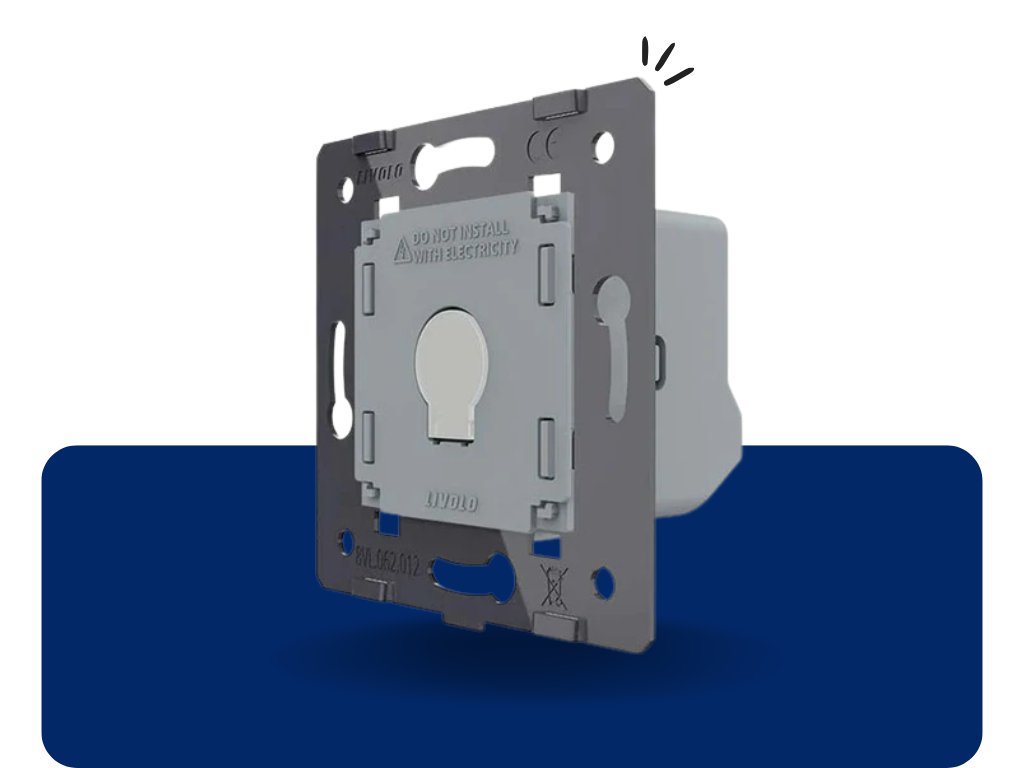 LIVOLO No. 6 touchGlass touch two-way switch.€28.40
 Karlik switch No. 7Intermediate switch for a third control point.from €6.85
Two-way switch wiring diagram for 2 places

So the box of the first switch has the incoming live and two outgoing travellers. The box of the second switch has two incoming travellers and the outgoing switched live. A mechanical switch does not need a neutral. Between the switches a 3-core cable (in Slovakia typically CYKY-J 3×1.5) is usually used: two cores are travellers, the green-yellow one is earth.
How to wire a two-way switch: step by step
Safety: Electrical installation work may only be carried out by a qualified person. Switch off the breaker and check with a voltage tester that the wires are dead. A new installation also needs an inspection.
- Switch off the breaker of the lighting circuit and check that the wires are dead.
- Find the live. Connect the live wire (usually brown or black) to the common terminal of the first switch.
- Connect the travellers. Run two wires from terminals 1 and 2 of the first switch to terminals 1 and 2 of the second switch. Their order does not matter, but they must not go to the common terminal.
- Switched live to the light. From the common terminal of the second switch run a wire to the light, to the centre contact of the lamp holder or the L terminal of the fitting.
- Neutral and earth. Connect the blue neutral to the N terminal of the light (the thread of a lamp holder). The green-yellow earth goes to the earth terminal of a metal fitting. Neither of them belongs in the switches.
- Check all connections and insulation. Switch the breaker on and try every combination: each flip of either switch must change the state of the light.
Control from 3 places: wiring an intermediate switch
If you want to control a light from three or more places (a long hallway, stairs over several floors), the two two-way switches No. 6 stay at the ends and an intermediate switch No. 7 goes between them. You can add more intermediate switches in a row, one for each additional place.

The most common mistake: the travellers from one side must go to one pair of terminals (input) and the travellers to the other side to the second pair (output). Which pair is which is shown on the back of the device. If you mix them up, the light will only work in some switch positions.
An intermediate switch means another 4-core cable to the third place. If you do not have one in the wall, see the solution without chasing walls.
Legrand, Karlik and LIVOLO terminals and the double 6+6 switch
The principle is the same for all brands, only the terminal markings differ. The common terminal is usually marked L, P, with an arrow or a different screw colour. The traveller terminals are marked 1 and 2 or with arrows. Always follow the diagram on the back of the specific device: this applies to Legrand, ABB, Schneider and Karlik alike.
Double two-way switch 6+6
A 6+6 switch is two independent two-way switches in one device, for example for the stair light and the hallway light. Each half has its own common terminal and its own pair of traveller terminals, six in total. Some devices have both common terminals linked inside (one live feed is enough), others have them separate. Wire each half exactly like the two-way switch above; the other place must also have a 6+6 or two separate No. 6 switches.
LIVOLO touch switches
A LIVOLO touch two-way switch is an electronic device, not a mechanical changeover switch. It is wired according to the manufacturer's own instructions, and both switches on one light must be LIVOLO. How to choose and order them is explained in LIVOLO touch switches: how to choose and order them correctly.
A third place without chasing walls and stair control from your phone
The most common problem when renovating: you want to control the light from another place, but you do not want to chase a new cable into the wall for an intermediate switch. The solution is a smart relay placed in the box behind the existing switch or in the box at the light. The original two-way switches stay and keep working, and you add control from your phone, by voice, by timer or with a wireless button anywhere.

How it works
- Wire the two-way switches as before, only the switched live from the second switch goes to the relay's SW input instead of the light.
- The relay has a permanent supply (L and N) and feeds the light from its O output.
- In the Shelly app set the input to Switch and the mode to Flip (toggle on every change). Every flip of either switch then changes the state of the light, exactly as before, and you can also control it from your phone.
- Add a third place with a Shelly BLU wireless button. A Shelly Gen3 or Gen4 relay also works as a Bluetooth gateway, so you do not need another gateway.
| Relay | Best for | What else it needs |
|---|---|---|
| Shelly 1 Mini Gen3 | standard lighting up to 8 A, smallest size | neutral in the box, Wi-Fi, Shelly app |
| Shelly 1 Gen4 | up to 16 A; Wi-Fi, Zigbee and Matter in one | neutral; dry-contact output, for lighting link L to terminal I |
| Sonoff Mini R4M | Apple Home, Google Home, Alexa via Matter | neutral, a Matter controller (e.g. Apple TV, HomePod, Google Nest Hub); wire two-way switches according to the Sonoff manual |
| Sonoff ZBMINI Extreme L2 | boxes without a neutral | a Zigbee gateway (if you already have one) |
 Shelly 1 Mini Gen3Wi-Fi relay behind the switch, also a Bluetooth gateway for BLU buttons.€13.49
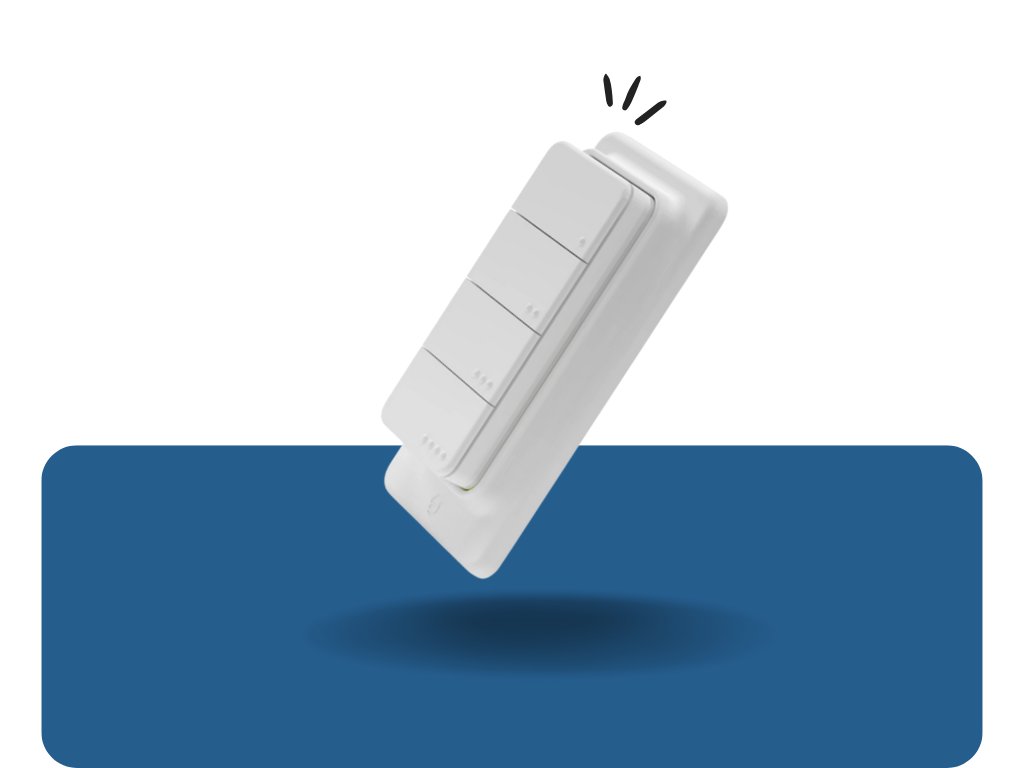 Shelly BLU RC Button 4 ZBBattery-powered wireless remote with 4 buttons. The Shelly relay is its gateway.€17.99
 Sonoff Mini R4MMatter relay for Apple Home and Google Home, supports two-way switches.€10.49
Stairs that light up by themselves
You can also add a Shelly BLU Motion ZB motion sensor to the Shelly relay. It also measures light level, so the stairs light up on motion only when it is dark and switch off again after a while. The switches keep working. The sensor also connects to the Shelly relay via Bluetooth, no other gateway needed.
Ready-made sets with prices
Prices are loaded directly from the shop, so you always see the current price and availability.
The original two-way switches stay, plus a wireless remote and phone control.
- Shelly 1 Mini Gen3€13.49
- Shelly BLU RC Button 4 ZB€17.99

The light comes on with motion in the dark, switches and phone keep working.
- Shelly 1 Gen4€19.49
- Shelly BLU Motion ZB€19.99
When a two-way switch does not work properly
- The light works from one switch only or only in some positions: on one of the switches the common terminal is swapped with a traveller. The live (or the wire to the light) must be on the common terminal, the travellers on 1 and 2.
- The breaker trips when switching: a traveller is connected to neutral or earth. Neither belongs in two-way switches.
- With an intermediate switch it only half works: the travellers from one side are not on the same pair of terminals. Check the diagram on the device.
- The LED bulb glows faintly or flickers when off: a small voltage is induced in long traveller wires, enough to light an efficient LED. An RC snubber in parallel with the light helps.
- The smart relay toggles by itself or twice: check the input setting (Switch, Flip mode) and that the SW input is not fed from the wrong terminal.
Frequently asked questions
What is the difference between a two-way and an intermediate switch?
A two-way switch (No. 6) has three terminals and is used in pairs to control a light from two places. An intermediate switch (No. 7) has four terminals and goes between two two-way switches when you want a third or further control point.
Is a two-way switch the same as a double switch?
No. A double switch (No. 5) controls two lights from one place. A two-way switch (No. 6) controls one light from two places.
How many wires are needed between two two-way switches?
Two traveller wires. A 3-core cable is usually used, with the third green-yellow core as earth. The first switch also gets the live feed and the second one sends the switched live to the light.
Does a two-way switch need a neutral?
A classic mechanical switch does not, it only switches the live. The neutral goes straight to the light. Smart relays (Shelly, Sonoff Mini R4M) need a neutral; without one you can use, for example, the Sonoff ZBMINI Extreme L2 with a Zigbee gateway.
Can I add a third control point without chasing walls?
Yes. Put a Shelly smart relay behind one of the switches or at the light and a battery-powered Shelly BLU wireless button at the third place. A Shelly Gen3 or Gen4 relay acts as the Bluetooth gateway, so you need no other gateway.
Will the original switches still work after fitting a smart relay?
Yes. The output of the two-way switches goes to the relay input, set to Flip mode in the app. Every flip of a switch changes the state of the light as before, and you can also use your phone or voice.
Can I use a two-way switch as a normal switch?
Yes. Just connect the common terminal and one of the traveller terminals. The switch then works like a standard one-way switch No. 1.
How many intermediate switches can I use in one circuit?
Any number, always between two two-way switches No. 6. Each intermediate switch adds one more control point.
Why does my LED light glow faintly when switched off?
A small voltage is induced in long traveller wires, enough to light an efficient LED. An RC snubber connected in parallel with the light or a different LED driver helps.
Can I wire a two-way switch myself?
Electrical installation work may only be carried out by a qualified person. This guide helps you understand the wiring and choose the right switches; leave the installation itself to an electrician.
Want to control your stairs from your phone too?
Fit the Shelly 1 Mini Gen3 in the box behind the existing switch and control the stairs from your phone, by voice or with a wireless button. No chasing walls and no extra gateway.
View Shelly 1 Mini Gen3